



The Health and Safety Executive (HSE) has published their 2025-26 statistics and guidance for work-related fatalities. The number of worker deaths is provisionally the lowest number recorded in a single year, with 126 workers and 104 members of the public in fatal accidents. The HSE has compared these figures against other countries, revealing that Great Britain is one of the safest places in the world to work.
The HSE has gathered its numbers through the Reporting of Injuries, Diseases and Dangerous Occurrences Regulations (RIDDOR), which includes numbers for fatal accidents of workers and members of the public.
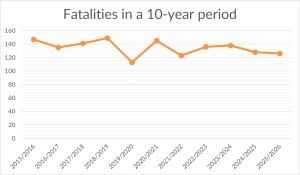
Figure 1: Fatalities in a 10-year period
Injuries by Industry
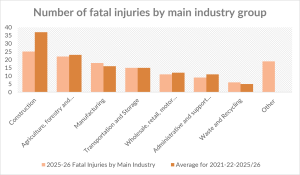
Figure 2: Number of fatal injuries by main industry group
As demonstrated in the figure above, construction continues to account for the largest number of fatal injuries to workers. However, the number of workers in the industry compared to the number of deaths must be considered; agriculture, forestry and fishing & waste and recycling have the highest rates of fatalities compared to workers. Based on annual average rates and the rate of fatal injury to workers in those areas, agriculture, forestry and fishing remains higher than average across all industries (21x), followed by waste and recycling (10x) and then construction being 5x as high.
Self-employed
Around 1/3 of fatalities were self-employed, despite self-employed workers only making up 15% of the workforce. These numbers are reflected in the work-type, where self-employment is far more common, such as agriculture, forestry and fishing & construction.
Injuries by accident kind
The HSE advised in their report that falls from height have been the main cause of work-related fatality in almost every year since 2001/02. This can be broken down by sector, reflecting the varying risks across industries. For example, a higher proportion of workers in construction suffered incidents with work from height compared to other sectors, where being struck by a moving vehicle accounted for more deaths in waste & recycling, transportation and storage, and agriculture, forestry and fishing.
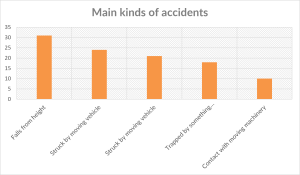
Figure 3: Main kinds of accident-types
Injuries by gender and age
In 2025-26, the HSE advised that males continue to account for most worker fatal injuries, with 93% of workers being men. In terms of age, 32% of fatal injuries were workers over 60, despite only making up 12% of the workforce.
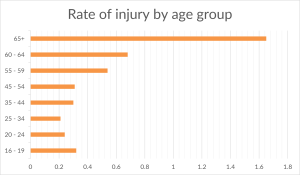
Figure 4: Rate of injury by age group
You can read more of the HSE guidance and statistics here.
How can we help?
Holly-Louise Batey is a Trainee Solicitor in our Personal Injury team, which is ranked in Tier One by the independently research publication, The Legal 500.
If you have any questions in relation to the topics discussed in this article, please contact Holly or another member of the team in Derby, Leicester, or Nottingham on 0800 024 1976 or via our online form.
Contact us