


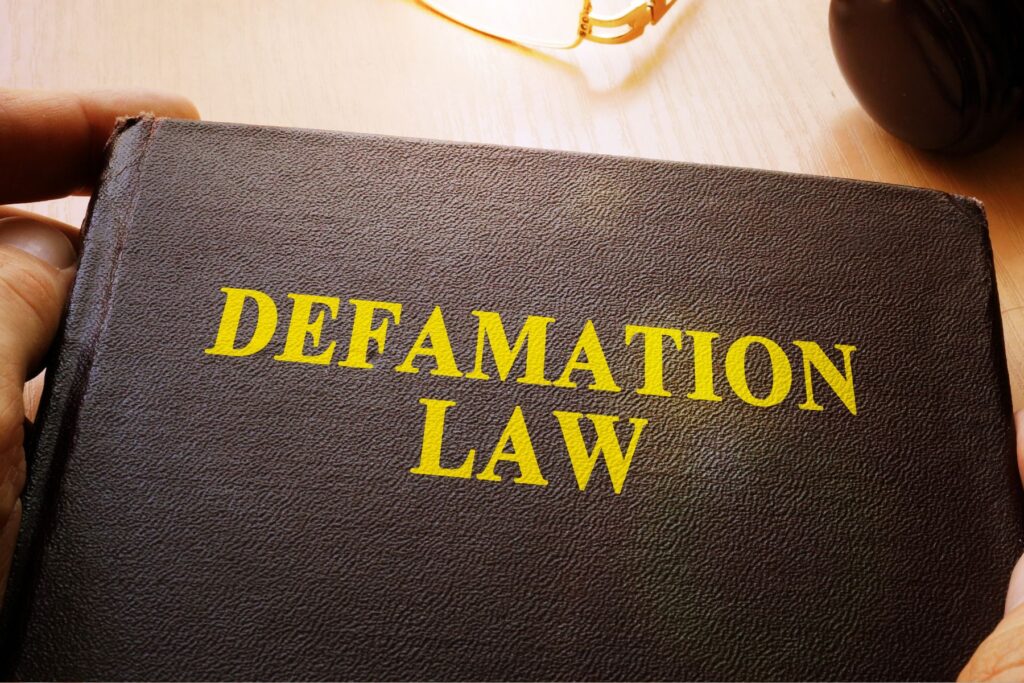
With the news that Prince Harry has been sued by Sentebal, a charity he co-founded, he once again finds himself in hot water. With this in mind, I have taken the opportunity to set out the key differences between libel and slander claims. Libel and slander are two types of defamation under UK law. Both involve statements that harm someone’s reputation, but they differ in how they are made, the evidence needed and the legal process.
So what is defamation?
Defamation occurs when someone makes a statement that damages another person’s reputation. If the defamatory statement made is executed in a permanent form, for example a post on Facebook or an article in a newspaper, this will be considered as Libel. If however, the statement is made in a temporary form like spoken words or gestures, it will be categorised as Slander.
Key differences between libel and slander
Form and Permanence is one of the most pivotal points that differentiate the two. Libel is a statement in a permanent form, such as a newspaper article, a social media post or an email. These statements last longer and can reach a wider audience. As such, libel claims are often more frequent as there tends to be lasting evidence of the defamatory statement. Slander is a statement in a temporary form, like something said in a conversation or a public speech. This will often be more prevalent if the individual making the statement has a prominent position and gives out speeches to a large audience of people.
Another difference is that the burden of proving harm is different. In libel cases, the law assumes the statement caused harm, so the person making the claim does not need to prove specific damage. Whereas in slander cases, the person making the claim usually has to prove they suffered a specific loss, like losing their job or money, unless the statement accuses them of a crime or questions their professional abilities.
The medium of communication is largely the mechanism that can result in the two distinct forms becoming overlapped. Some forms of communication, like TV or radio broadcasts, are treated as libel even though they are spoken, because they can reach a large audience, have a lasting impact and could be considered as permanent with them being recorded and broadcast accordingly. Online content, like social media posts or emails, is also treated as libel because it is in a permanent form, even if it can be deleted by the poster. If this were to happen, the footprint of the post will likely continue to exist, especially if the statement made were of a defamatory nature.
Finally, the evidence requirements vary slightly. For both libel and slander, the person making the claim must show that the statement was shared with someone else and that it was understood as harmful. However, slander cases are harder to prove because the person must provide exact evidence of what was said. General impressions or summaries of the statement are not enough.
With no further details about the claim lodged by Sentebal at this stage, it will be interesting to see how it pans out with Prince Harry’s spokesperson categorically rejecting the claims. I anticipate that given previous high profile cases like the ‘Wagatha Christie’ saga, this will likely be prominent in the media if the case is not settled promptly.
How can we help?
Giacomo Ciccognani is a solicitor in our expert Dispute Resolution team.
If you have concerns about service out of the jurisdiction, please contact Giacomo or a member of our expert team in Derby, Leicester, or Nottingham on 0808 239 3916 or via our online enquiry form.
Contact us