


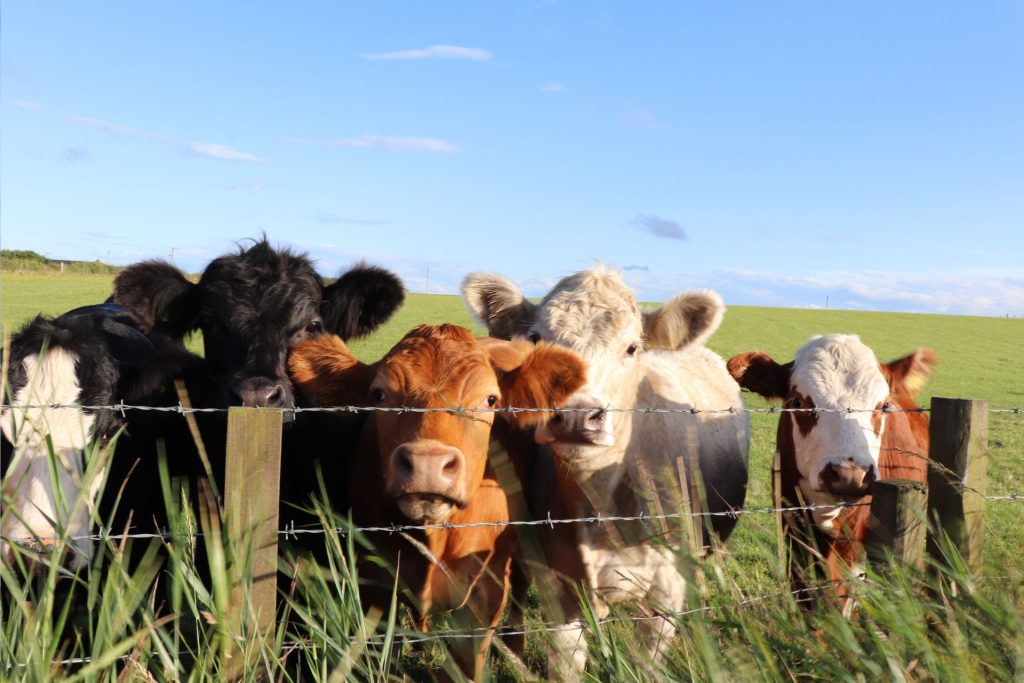
With the weather warming and summer holidays approaching, more people will be enjoying leisurely walks in the countryside. Thanks to the Countryside and Rights of Way Act, the public are entitled to access and enjoy the countryside this does however, come with risk.
Between 2015-16 and 2019-2020 the Health and Safety Executive (‘HSE’) investigated approximately 142 incidents relating to cows. 22 of these resulted in death, and the majority involved those who work with cows. Approximately 4 of those deaths, were suffered by members of the public. Lastly, the HSE investigated 65 non-fatal accidents involving cattle and members of the public in the same period.
More recently, the HSE fined a Cornish farmer for failing to take action when walkers had been attacked by cattle with calves on a public footpath. Cattle with young calves are known to be protective and unpredictable yet in this case they had been kept in a field with public access.
Farmers should have regard to the HSE’s guidance, which states where reasonably practicable, they should:-
- Where possible, avoid putting cattle, especially cows with calves, in fields with public access;
- Do all that is reasonably practicable to keep animals and people separated, including erecting fencing (permanent or temporary), such as electric fencing;
- Assess the temperament of cattle before placing them in fields with public access;
- Any animal that has shown signs of aggression must not be kept in a field where they have access to the public;
- Clearly signpost all public access routes across the farm and display signage at all field entrances stating what livestock are present, such as cows with calves or bulls.
Farmers who keep cattle are also reminded by the HSE that members of the public are unlikely to understand cattle behaviour, and this should be taken into account when placing livestock on land, considering points such as the type of public access in the area (e.g., will it be large groups of walkers with dogs, groups of children or lone walkers?).
Animals Act
Under the Animals Act, a claimant will need to prove the following points to success:-
- the damage is of a kind which the animal, unless restrained, was likely to cause or which, if caused by the animal, was likely to be severe; and
- the likelihood of the damage or of its being severe, was due to characteristics of the animal which are not normally found in animals of the same species or are not normally so found except at particular times or in particular circumstances; and
- those characteristics were known to that keeper or were at any time known to a person who at that time had charge of the animal.
Dogs and their impact
Cows are sometimes allegedly more threatened by dogs than humans, and will instinctively become aggressive towards a dog especially when protecting their calves. If you are walking your dog and become attacked by cows, it is advised to let go of the dog’s lead. The dog will most likely outrun the cow(s).
On 18 March 2026, a new law came into effect which gave farmers stronger protection from dogs to prevent livestock worrying. Under The Dogs (Protection of Livestock) (Amendment) Act 2025, if a dog has attacked or worried livestock, the owner can receive an unlimited fine, and the police have powers to seize and detain the dog. Therefore, your dog should remain on a lead when around livestock (including cattle, but especially sheep), unless attacked, when it advised releasing the dog from the lead to outrun the livestock.
Advice
Sometimes, a herd’s curiosity is mistaken for aggression. Members of the public are advised to remain calm and refrain from making startling or quick movements when approached by cows. Similarly, stay clear of any calves, stick to the paths and remain vigilant.
If you are attacked by livestock to include cows, or even a bull please do not hesitate to contact Nelsons, inform the landowner (if known) and the local authority of the attack. You can also contact the Concerned Over Walkers Safety (COWS) community, to receive advice from those who have also been injured or frightened by cattle while out on a walk.
How can we help?

Holly-Louise Batey is a Trainee Solicitor in our Personal Injury team, which is ranked in Tier One by the independently research publication, The Legal 500.
If you have any questions in relation to the topics discussed in this article, please contact Holly or another member of the team in Derby, Leicester, or Nottingham on 0800 024 1976 or via our online form.
Contact us